

Witness Notes 6
Cercal, Alentejo, Portugal. May 2020
(After you have read these introductory paragraphs once, you can skip to the new/old content below. If you are listening, then the time stamp is around the two minute 45 second mark.)
Introduction
The word settled, to me, carries connotations I am keen to avoid. I have never felt settled or, perhaps, I cannot recall a time I felt settled. I do not feel settled now, writing this, and I’ve lived in the same house for three and a half years.
Without even discussing the obvious issues of colonisation, I just don’t feel like I could, or should, settle; better to keep my constituent parts shook up, agitated perhaps, rather than separating and stagnant.
Instead, I feel as though I have been travelling for years, maybe because I have not lived in my ‘home’1 nation of Scotland for eight and a half years, perhaps because I know I won’t stay here forever, or maybe because I carry that concept of home in a way which differs from many?
More precisely, I still think of myself as a slow traveller, globally feral.
Recently, I have been revisiting places through the photographs and words I recorded when my feet crossed their soil. This is a way of reminding myself of where I have been, not just in space and time, but in mind, too. It is a wonderful thing, to come out of a low and rediscover myself through words I crafted, through the lens of a camera, when memory has wandered in the fog for too long. Thank you, past me.
When I first started sharing letters with the world in this fashion, six or more years ago, I usually began them with a vignette of where I was, a sort-of travel diary, mixed with nature observation, locking in the setting for the reader, before I spoke of other things—and, by so doing, ensuring that place fed into the whole. It was a useful device, for reader and myself both but, as these letters were sent to so few readers, and now languish archived behind a paywall, I thought it a shame not to share these snippets again.
As such, I am going to share a short series of these sketches, accompanied by a photograph from that time, sent to you in date order.
I shall include the above paragraphs in each of the letters in this series, but I shall also include a link at the very start, so you can skip ahead once you are familiar with the above words. If you are listening and similarly want to skip, then the timestamp you want to navigate to will be in the same place.
Taken without these paragraphs, each is a short read, and I hope you enjoy them.
Cercal, Alentejo, Portugal. May 2020
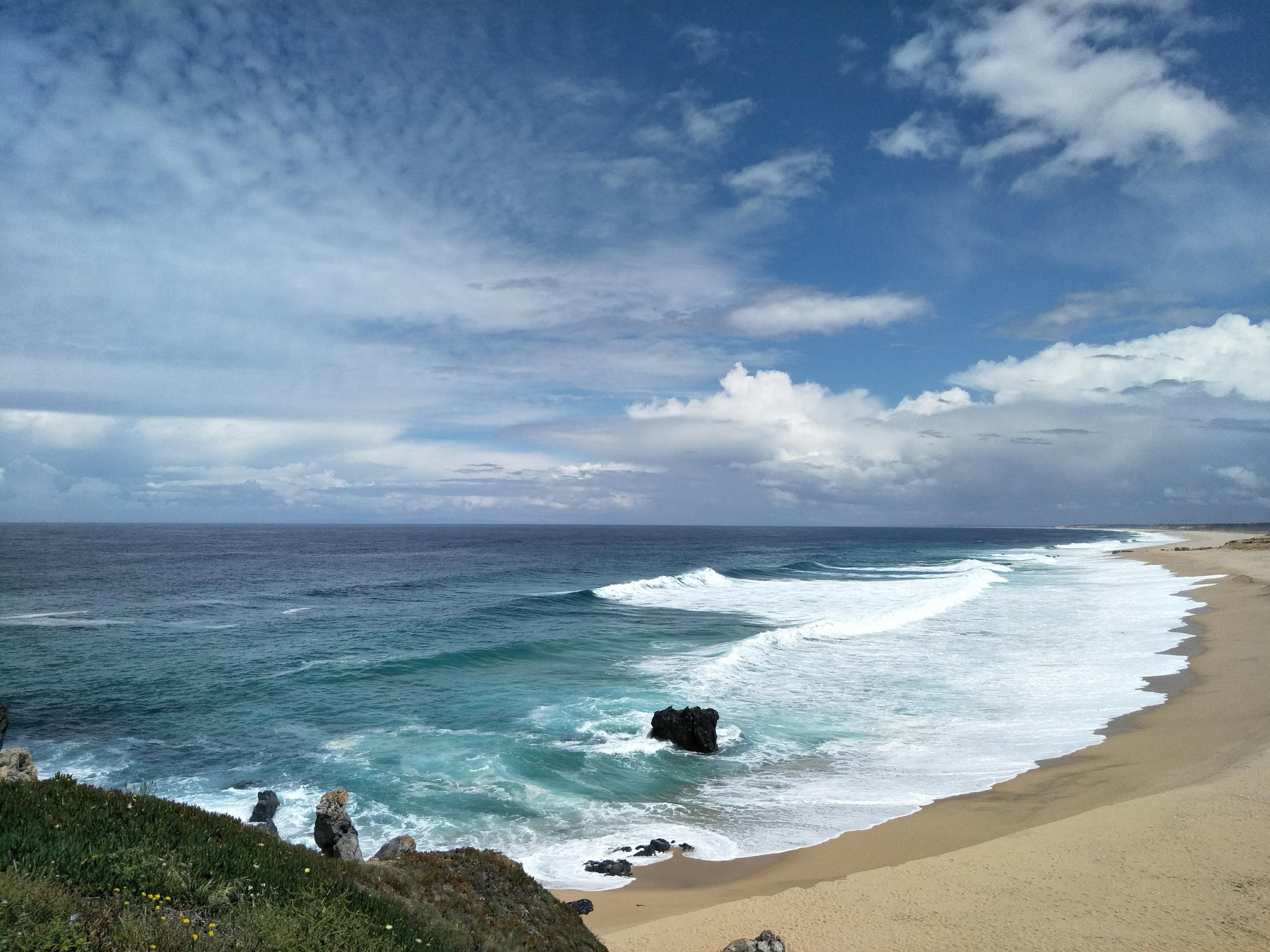
We live around 12 kilometres, or 7.5 miles, from the ocean. Here, as I have mentioned, the ground begins to fold and hills rise around us, stretching above crinkled, complicated valleys, all the way down to the Serra de Monchique.
Hills to the south, rolling cork oak pastureland and fields to the east, plains all the way north, and the vast, roiling waters of the Atlantic to the west.
There are mornings where a fresh wind from the west brings the scent of the sea; hike to the crest of the first hills in that direction and you can see the haze of salt spray spreading out below you, all the way to the coast. It is barely a stretch of the imagination to imagine a 16th century farmer watching as Barbary Corsairs destroyed the village of Vila Nova de Milfontes, taking away the inhabitants, condemned to a life of slavery. There is a reason there are so few old settlements along this coast, and that reason was piracy.
When I look at a landscape, I tie it to my imagination and what I know from history, archaeology, and reading. Sometimes, this is unconscious thought, ideas and ghosts of stories flickering across my mind; at other times I deliberately wonder what the young Alex would see if transplanted to this place and time. He would undoubtedly have read the tales of the pirates and made up fables of his own. There are deep caves here, tunnels from the mines which date back many centuries. Now, they are important for the local bats but, perhaps, young Alex would have been convinced some contained pirate treasure. He would definitely have climbed up and down the crumbling cliffs, leaping across fissures here, ignoring the drop and possibility of injury, flush with the fearlessness of the young and invincible.
When I inhale the scent of the early morning, watering the plants on the small balcony, catching the familiar salty tendrils on the breeze, I am reminded of other early mornings near the sea. I still recall the first time I awoke in Stromness, the way the air tasted utterly different from what was then called South Humberside. It left a deep sense of magic, which has not faded with time.
The sea is within me, in a way almost impossible to describe for those who did not grow beside her, have never sampled her moods and tasted her fury, and this creeps into my writing.
Eventually, everything does.
Finally
If you can afford to, there are currently two direct ways to support my work here. The first is to take out a paid subscription.
The second way to support me here is to use my Kofi button/link to send a tip of any amount.
If you enjoyed this letter and wish to share it with others, please do so! I love it when someone shares my work.
I also love it when you comment on a piece—really, really love it. Although I always read and appreciate these comments, during 2025, I was not as good at responding as quickly as I would like but, seeing as my word of the year for 2026 is ‘communication’, I like to think that will soon change.
Finally, many thanks for reading. I truly appreciate each and every one of you who does.
And ‘home’ is another of those words. A subject I have been writing around for decades now, one I keep threatening to try and pin down in a long essay, but an essay which has now escaped the confines of a compact base and rambled out into something wilder, more feral. One day I’ll share that with you.
You have set this scene beautifully: the magic of place,a wonderment from the young alex, a bit of history, and the sea as background and foreground. I can smell the salt. Feel the mist. See the pirates from the balcony when tending the flowers.