

Death and Taxes is the third in the Tales of The Lesser Evil and this is the seventh chapter.
This is a fantasy series—not quite grimdark, but dark nevertheless—with complicated and believable characters doing their best to survive in a world simply indifferent to their existence.
To read an introduction to this novella, and the backcover blurb, click here.
If you enjoy this story and aren’t already subscribed, please consider doing so:
share this with those you know,
or like, comment, or restack on Substack Notes.
Preparation and The Petals
One of the earliest lessons Little Pepper received from her uncle had been about preparation.
‘You will find that many people will complain about luck. They will moan about how life is unfair, how they never had a lucky break. This is just not true, Little Pepper,’ Pol had said. ‘You make your own luck through preparation. If someone thinks you are lucky to have killed a skilled swordsman, this luck is the luck of many hundreds, or thousands, of hours of training. Preparation is key. If someone thinks you are lucky to have survived a fall from a rooftop which they think should have shattered your bones, this luck is the luck of knowing how to fall, how to slow yourself, how to land, to roll. It is the luck of conditioning, strengthening, knowing and understanding your own body. Preparation is everything.’
It had been an easy lesson to learn, a much harder one to put into practice.
As she walked, Little Pepper smiled at the memory. She had worked harder than Pol thought she should, never stopping, never ceasing her education and training; polishing skills until she knew they shone brilliantly. When he had taught her about having stashes around the inner-city, perhaps one every other Petal, she knew she must put together four times as many. She had spaced them as evenly as she could, two in each Petal, with others in the city beyond.
Each stash was cleverly hidden, perfectly balanced and designed. It had taken many months to steal, collect, and buy the items Pol had told her she would need: spare clothing, food, rope and smaller cordage, knives and sharpening stones, money, make-up, wigs, and much more. Some items, like the dried moss and clean rags for when it was her period, she had added herself; her uncle had not thought of that one. Keeping each hiding place safe from rodents was the hardest thing. People were easier to hide from when compared to rats and mice—and people rarely chewed through a pack strap or nested in her clothing.
She had checked on this particular location just a week ago, replacing some nuts, pemmican and jerky, checking the weapons and tools for rust, oiling them along with their leather pouches, sheathes, and straps. Going from stash to stash, keeping each in perfect condition, was time-consuming, but Little Pepper knew the value of these hidden treasures.
Another lesson Uncle Pol had impressed upon her had been one of the matters of history. To know a place, inside and out, across the ages—that, he had said, was a power of its own. She had always known how to read, how to write, putting her high in a tiny percentage of others with the arcane power of grammarye. Ever since she had been tiny, when her parents had still been alive, she had been read to, and read herself. Uncle Pol sent her to tutors—very, very, expensive tutors—to learn to read and speak and write in other languages. Then he sent her to The Hall. Not officially—that was almost impossible—but he showed her the ways into the vast array of buildings and libraries owned and curated by the scholars. And, every night for several years, she read. Perhaps most of all she loved tales from travellers and witnesses to great events, both recent and ancient.
Far back in time, the rulers of Fea had tried to impose order on the chaos which had organically developed within their city. They wanted to rid themselves of the maze of narrow streets, remove the buildings that would appear wherever there was space: up, down, sideways. They wanted boulevards and trees, places where the sun could enter and the populace could gaze lovingly at marble statues of adored rulers.
They sent in the army, supported by something even more insidious: The Royal Architects. These learned worthies decided it would be best to approach the random mess of their city in a logical fashion, to divide the city into easily managed and controlled segments. These were the Petals.
Elephant teams were hired and aided the military in creating wide boulevards stretching from the outer wall of Fea Little in a straight line to the centre. These were designed to be the forerunners of order amid the chaos. As they destroyed buildings, homes and businesses, filled in sudden underground and ancient voids, they fought a constant battle to prevent the space once more becoming encroached upon.
The Queen listened to her architects and decreed that each boulevard should be flanked by thick stone walls, gates along its length and a constant patrol along the top. These walls would protect the city from both potential invaders and the tide of poorly-constructed structures it had long been plagued with. Foundations were dug, the walls grew.
The traders tried to explain this order would cause their business to falter but were ignored. They were afraid the lack of chaos would ruin the very prosperity and trade upon which the city had for so long thrived—and they were right. People began to leave, caravans would avoid Fea Little, the new gates making it a less attractive prospect due to increased taxes.
It took nine years before the revolution began, only nine days for it to be complete.
By the time it was over, the Queen had been fed to her own dogs, her consorts killed or disappeared, and the army destroyed by mercenaries hired by those traders who still remained. The Royal Architects were sought, captured, and walled up alive within the very walls they had designed.
The building projects and the pacification and gentrification of the city stopped. The huge walls, those that had been completed, were left where they stood and were soon found to be useful for anchoring new buildings to. The boulevards soon disappeared, first under stalls and tents, then under shanty structures, before finally vanishing below stone and wood and brick.
The walls remained and gave the city districts—the Petals. Each Petal was a part of a whole, with doorways, arches, tunnels, gaps, stairs, ropes and bridges connecting each segment: above, through, and below the great walls. It was a mess.
It was also the perfect place to hide. Fea Little was well named as The City Of Mazes.
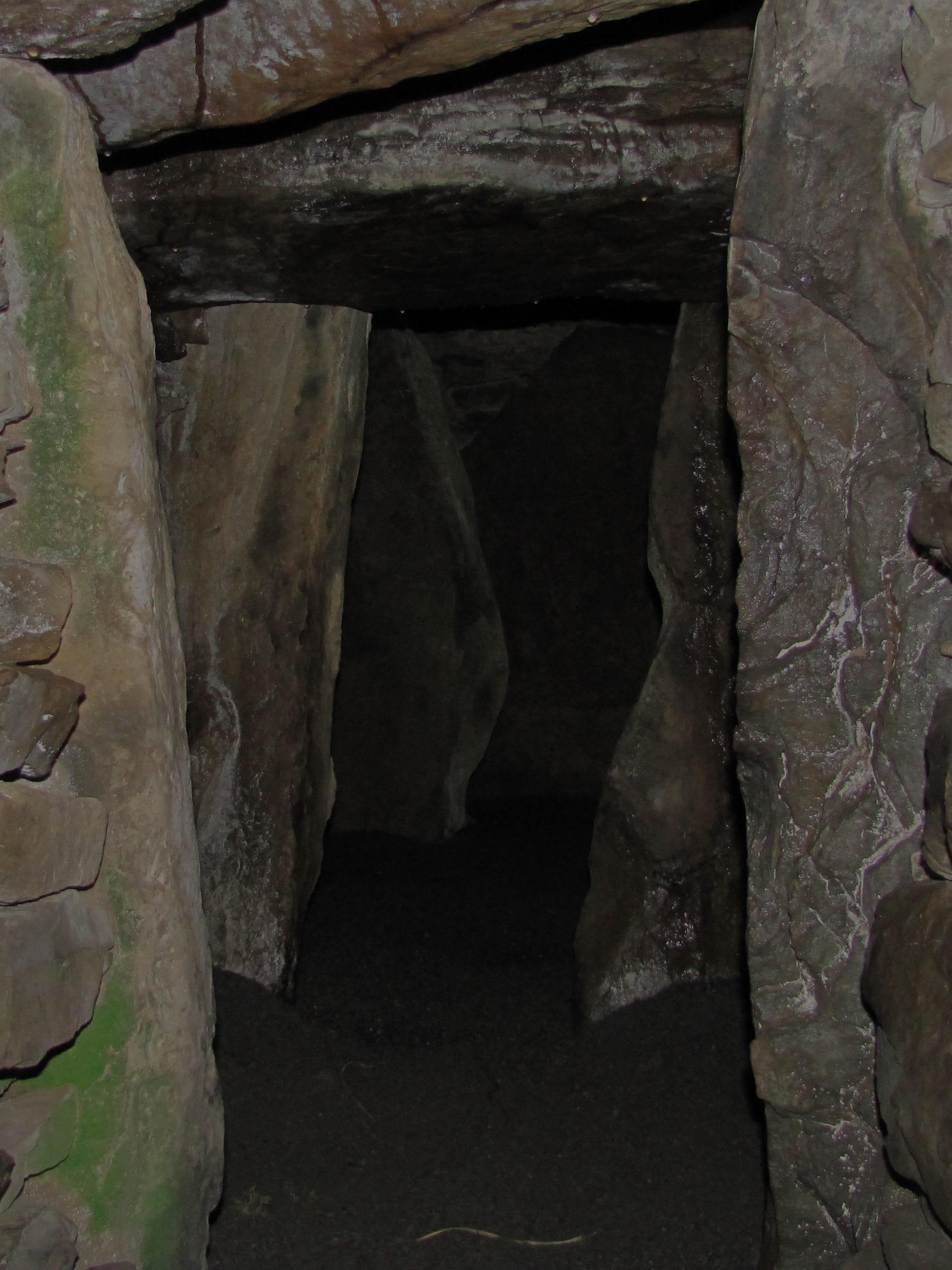
The room Little Pepper used to house this particular stash, buried within the old Petal wall, had perhaps once been a privy, or a guard cell. Now it could only be accessed by climbing a narrow and hidden chimney she guessed had once been the path waste descended but, if it had been, it showed no sign of it now.
Her pack was untouched. This location was one of only two which never had trouble with rodents. Bats had once slept there and their droppings had made a deep and dusty mess on the floor when she had first found it, but no longer. Cleaning the place had taken days, the dust would have been unbearable without a heavy cloth over her mouth and nose and, even then, it had been difficult, eyes repeatedly blinded every time she filled another sack with guano.
Difficult, yes, but well worth the effort. Preparation in all things.
Not only had Little Pepper stashed her pack in the room, but she had also made a nest to curl up in, a small stove and fuel in one corner with a pipe cunningly routed to take the smoke up through the thick masonry above her, invisible to all. She had food and flagons of ale, bottles of cordials and even a tiny barrel of wine stored here. There was a workbench she used to manufacture and mend, and shelving completely covered one wall, each surface full of diverse and different items: a few gifted, some paid for, most stolen.
Along with her stashed packs, she had three other places like this, spread across the city. It was a natural extension of what her uncle had taught—preparation was indeed the key.
She knew it was likely she would not be back in Fea for some time, probably for several years, at least. She itched to get out, to see the world beyond. She had travelled with Pol on a few occasions, but they had never been more than a week’s walk away. When he had left Fea Little to help Guin get to Eastsea, she had been made to stay, to continue her studies with her tutors, continue reading in The Hall. Although it had irritated her, they had been in the middle of an important job and they could not both go. Her uncle had never suggested she was too young. Her emotions had been conflicted—huge pride at being able to carry on and complete the job on her own, irritation and sadness at not getting to see somewhere strange and foreign.
As she started to pack, a thrill of excitement tingled through her, making her grin. Soon she would be on the road, rich and in good company, with adventure and the unknown ahead. A small part of her knew it was likely she would not stop travelling—at least not for many years—and the same part also suspected Pol would settle and retire, but she was not ready for that life. Her skills itched to be used.
It did not take very long to add some things to her pack, get changed into clean clothing and grab a bite to eat.
Then it was time to go. Time to start moving towards a new life.

Many thanks for reading.
Go to the next episode here.
Head to the introduction and contents page here.
Go back to the previous episode here.
Or read more about my fiction here.